How qualification actually filters suppliers
Prequalification for major UAE energy buyers — ADNOC Group entities among them — runs through a supplier portal and evaluates technical capability, financial strength, quality systems, HSE controls and delivery history. The process typically takes two to six months, requires audited financial statements for recent years, and for tenders an ICV (In-Country Value) certificate substantially strengthens the file — often with expectations around the 30% mark for winning work.
Most applicants prepare those layers well. The layer that is underprepared — and increasingly probed in questionnaires and audits — is continuity of supply: what happens to your delivery when your facility, your systems or your own suppliers fail. A buyer whose production line depends on your part does not care why you stopped; procurement scores the risk of you stopping at all.
Why the bar is rising now
- National standards flow down. NCEMA 7000 obliges critical-infrastructure operators to evaluate the continuity arrangements of critical suppliers — the evaluation lands in your questionnaire.
- The regional threat picture. Ransomware and airspace incidents have made «supplier down for a week» a scenario buyers now model — and ask about.
- Concentration reviews. Buyers increasingly map single-source dependencies. Being the single source is commercially excellent and contractually demanding: expect continuity clauses.
- Insurance pressure on buyers. Business-interruption underwriting asks operators about supplier resilience; operators pass the question to you.
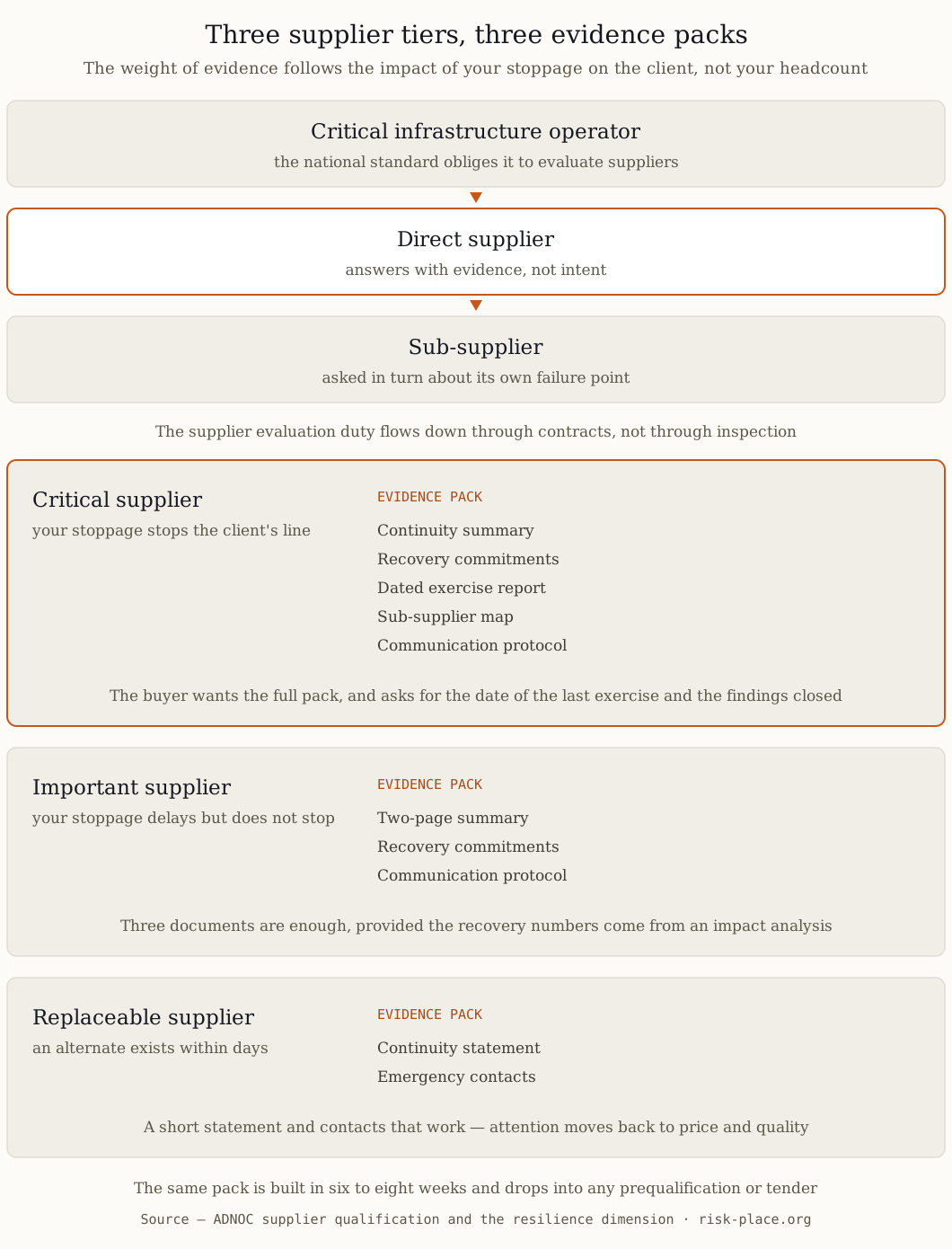
The continuity evidence that strengthens a file
| Evidence | What it demonstrates | Effort to produce |
|---|---|---|
| A supplier-facing continuity summary (2-3 pages) | You have thought about your own worst day and its effect on the client | Days, from an honest BIA |
| Recovery time commitments per service | You can state — not guess — how fast delivery resumes | Follows from the BIA and one test |
| Last exercise report | The plan is real: tested, with findings and fixes | A half-day tabletop, written up |
| Sub-supplier dependency map | You know your own single points of failure one level down | A focused workshop |
| Incident communication protocol | The client hears from you in hours, not days | One page, agreed internally |
The pattern in supplier audits across the region: the question has shifted from «do you have a business continuity plan?» to «show us the last time you tested it». A dated exercise report outweighs any policy statement.
A 6-8 week preparation path for suppliers
- Weeks 1-2 · Scope and BIA. Which client commitments depend on which facilities, systems, people and sub-suppliers; cost and client impact of a lost day.
- Weeks 3-4 · Close the loudest gaps. Single points of failure with cheap fixes first: alternate logistics, documented workarounds, first-hours authority in writing.
- Week 5 · Test. A half-day tabletop on your worst realistic scenario; write the report; fix the top three findings.
- Weeks 6-8 · Package. The continuity summary, commitments and evidence — formatted to drop into any prequalification or tender response in minutes.
Frequently asked questions
Is a business continuity plan mandatory for ADNOC supplier registration?
Registration and prequalification evaluate management systems, HSE, financials and delivery capability as a whole; a continuity plan is not a stand-alone mandatory certificate. In practice, continuity evidence strengthens exactly the dimensions qualification scores — delivery reliability and risk — and tender-specific requirements can and do ask for it directly.
Does ISO 22301 certification help a supplier file?
It is strong evidence — recognised, auditable, international. For most SMEs the pragmatic first step is a focused, tested continuity capability for the client-facing services; certification can follow when contract volumes justify it.
We are a small trading company, not a manufacturer. Does this apply?
Yes — your risk is concentration: one principal, one warehouse, one forwarder. A two-page continuity summary showing alternate routing and stock logic answers most questionnaires at your scale.
How does ICV relate to continuity?
They are different lenses on the same buyer concern — dependable local supply. ICV scores where your value is created; continuity evidences that the supply survives disruption. Files that are strong on both read as a lower-risk award.
Context sources: ADNOC supplier portal prequalification guides (2026), publicly available advisory summaries on prequalification timelines, financial documentation and ICV expectations.