Technical recovery has a clear centre: clean systems, restored data and controlled access. The business has another centre at the same time: which order can be accepted, which delivery should wait and what the customer can safely be told. Treating these as one job creates confusion; coordinating them preserves a smaller but reliable working day.
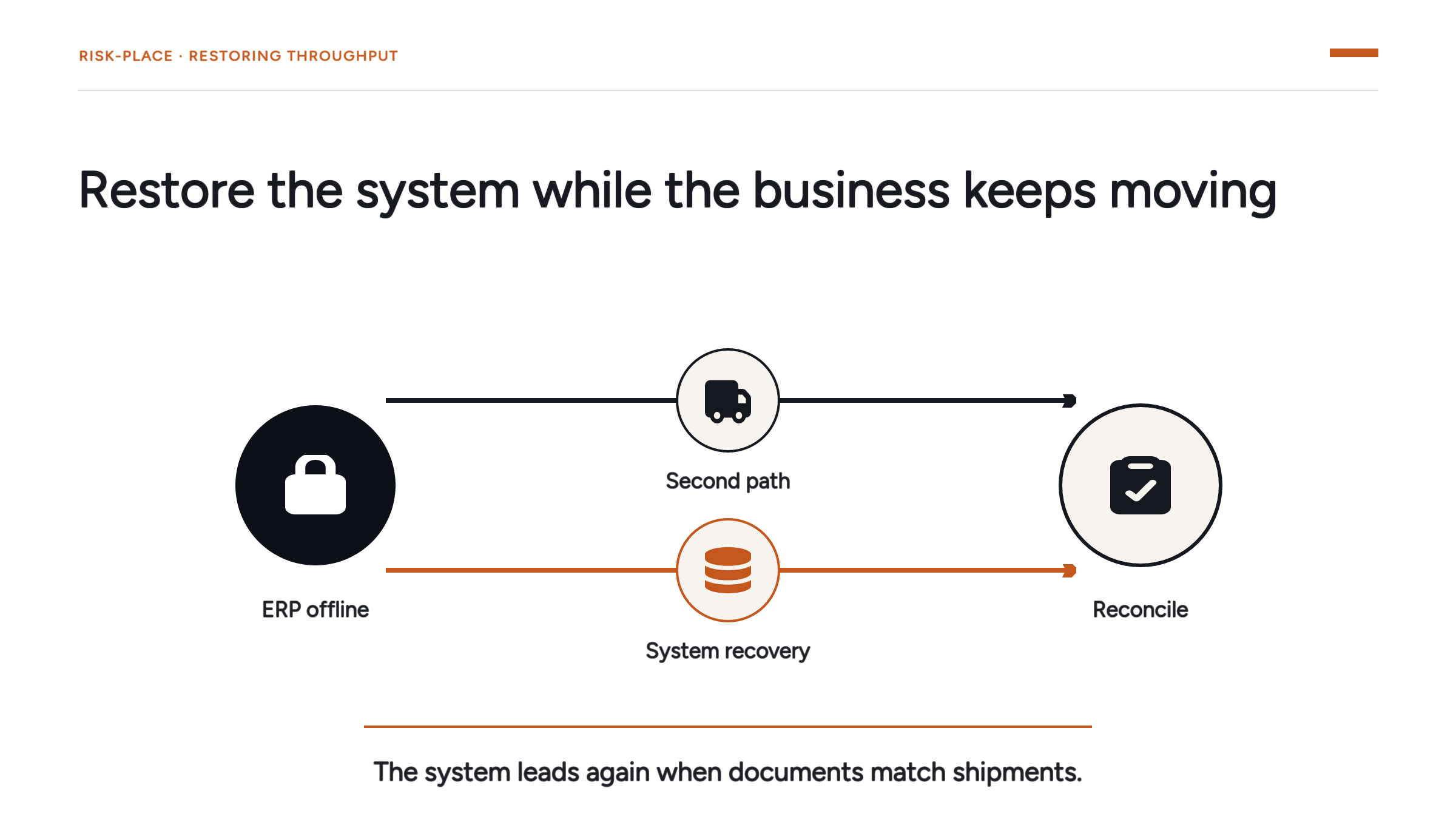
Put two workstreams on one timeline
Let the technical team own restoration and evidence. Let an operational lead own the limited order flow. Both should report into the same decision rhythm, so the business does not make promises based on an optimistic restoration estimate.
At the first coordination point, write the output that can genuinely be supported, the orders outside that limit and the time of the next joint review.
Give every manual action a future home
Use one log or numbered forms for accepted orders, stock movements, releases and customer commitments. Record the time, quantity, responsible person and supporting document.
- Check each release against the dated balance used by the manual path.
- Update that balance before making another promise.
- Keep supplier holds and route changes in the same operational record.
- Hand over open and completed items explicitly between shifts.
Keep one reliable story for counterparties
A supplier needs an instruction, not a technical narrative. A customer needs a date supported by the limited flow. A public statement should use the same confirmed facts and state the next update.
Decisions about ransom, insurance and investigation belong to their authorised processes. They do not belong in an operational promise to a customer, and they do not replace the work of maintaining that promise.
Return to normal through reconciliation
Before new orders flow into the restored system, enter the manual records, compare them with physical goods and resolve discrepancies. A login screen is not proof that the business record is complete.
A ransomware readiness check rehearses this whole day: the reduced output, decision rights, counterparty messages and the point at which the restored ledger can lead again.
Questions owners ask
Can normal output continue through the manual path?
Only if a rehearsal has demonstrated that volume with reliable data, documents and authority. Usually the manual path supports a deliberately reduced flow.
When should customers receive normal commitments again?
After the restored system reflects the manual day and operations confirm that records, stock and physical shipments agree.
Why keep recovery and manual operations connected?
Customer promises and operating limits depend on the actual state of restoration, while reconciliation depends on a complete record of what the business did manually.