The phones start before the assessment is finished. A supplier asks whether to send the truck. A customer asks for Friday's order. Employees pass on fragments from different conversations. The quickest way to steady the day is not a confident guess; it is a shared record of what is actually known.
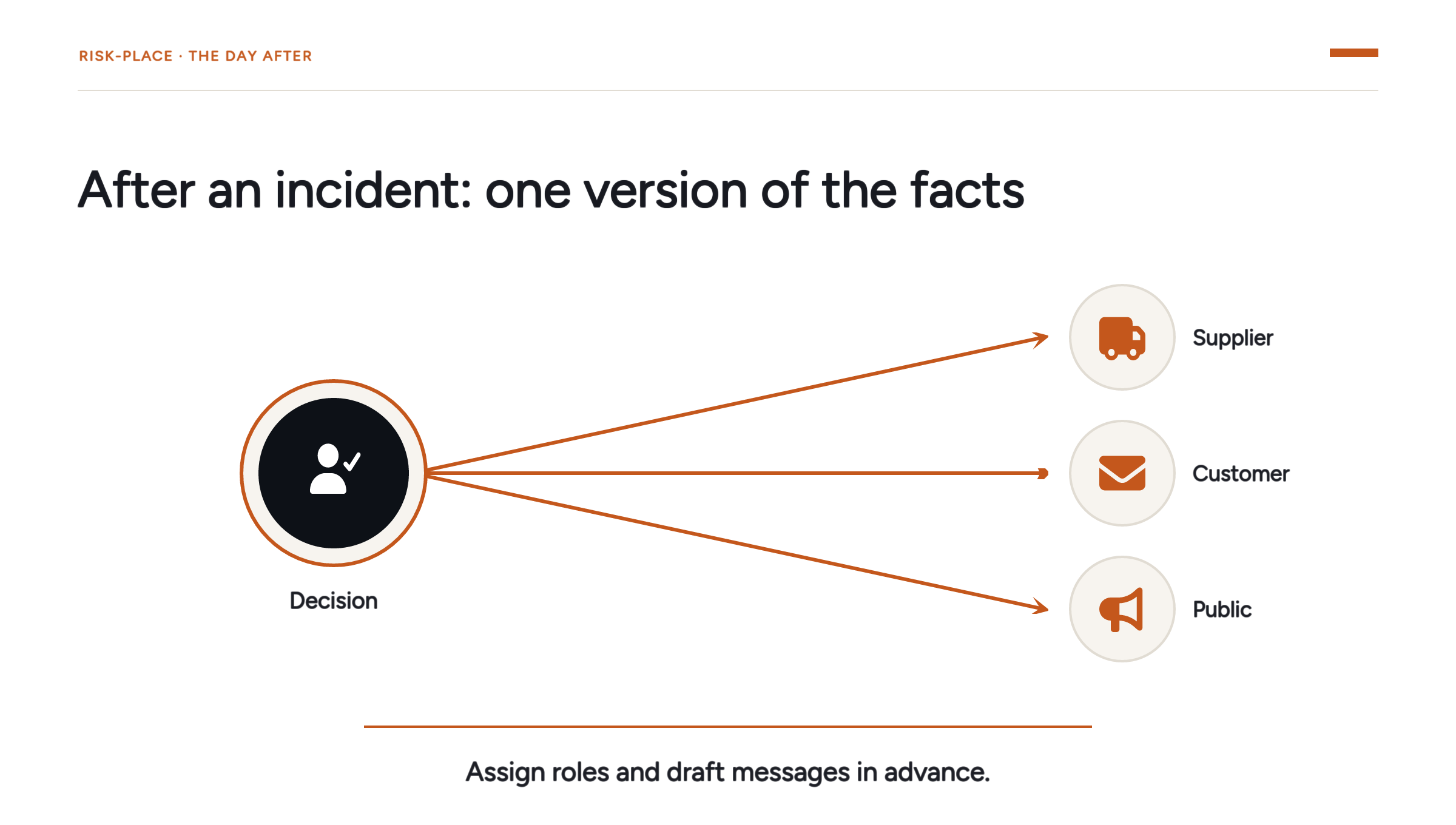
Open a record of confirmed facts
Write the first version in plain language: when the interruption began, which operation is affected, whether anyone is at risk and when the next assessment is due. Mark unknowns as unknown.
Give the record one owner. Site management, security, IT and operations send their confirmations to that person. The result is a common timeline for decisions, rather than several incompatible stories circulating at once.
Name who can decide before naming a date
A delivery date is not a communication detail; it is an operational promise. The person who gives it needs current information from the site and authority agreed before the incident.
- One role stops or restricts work and records the decision.
- One role confirms what can be delivered and when.
- One spokesperson handles external enquiries, with a deputy.
- Every audience is told when the next update will arrive.
Write three messages from the same facts
The supplier needs an instruction: hold, reroute or proceed. The customer needs a confirmed volume and date. A public statement needs a short account of the operational effect and the next update. None of these messages should contradict the others.
Do not turn an unknown cause into a public conclusion. Accuracy buys more trust than an answer the company may have to withdraw.
Prepare the sentences while the day is quiet
Draft the internal notice, supplier instruction, customer update and public response in advance. Leave space for verified facts, an authorised contact and the time of the next message.
A drone strike readiness check tests these decisions and messages against a site scenario. It reveals who still lacks authority, information or a workable channel before those gaps become public.
Questions owners ask
What can we say before the cause is confirmed?
State what has stopped, which operations are affected, what is being done and when the next update will arrive. Leave causes and blame out until confirmed.
Who may give a customer a new delivery date?
A role named in advance, using current confirmation from operations and working within agreed limits.
Should the public and customers receive identical texts?
They can receive different levels of detail, but the confirmed facts and operational impact must be consistent.