A protective canopy, another gate and a backup are visible investments. Yet the first difficult question after an incident is often much less technical: which orders can still leave, and who is allowed to promise that to a customer? A company becomes easier to steer when the owner has answered that question on a calm day.
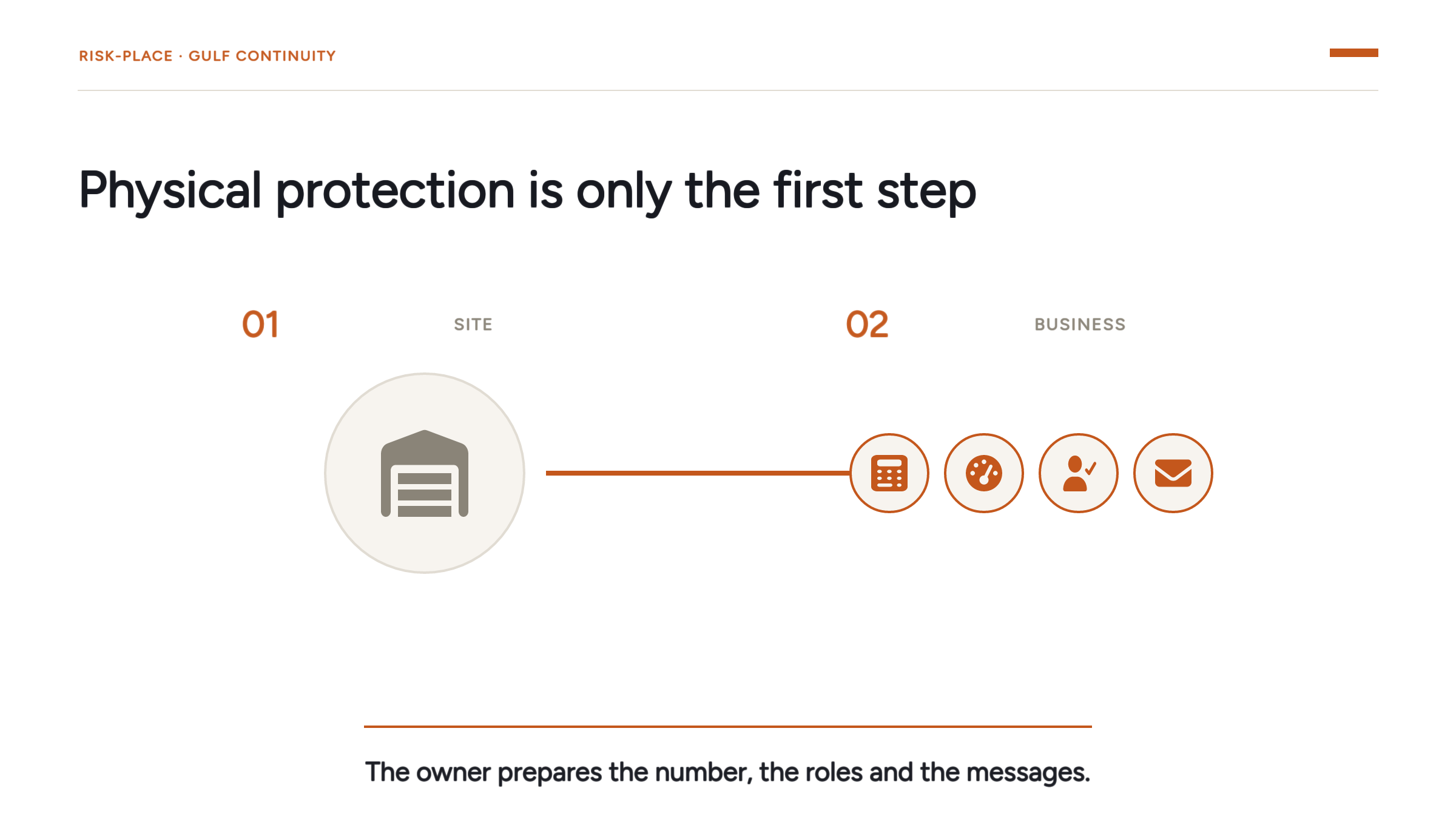
Begin with the day you can no longer run
Choose one familiar flow: a delivery arrives, a team processes it, finished goods wait in the store and a truck leaves. Now remove one part of that scene. The gate is closed. The store cannot be entered. The system that releases goods is unavailable.
The value of the exercise is its specificity. Instead of discussing every possible threat, the team discovers where a normal day loses its next step. Those are the places that deserve the owner's attention first.
Give the stopped day a number
Calculate the day at the node that has stopped. Include shipments that did not happen, payroll and rent that continue, contractual consequences and the effort needed to regain the previous pace. Then write down how much work could still be completed through another route.
Two figures are more useful than one large loss estimate: what the interruption costs and what the company can preserve. Together they show whether a second gate, an outside store, additional inventory or a different operating procedure would make the greatest difference.
Put the insurance policy on the same table
Read the interruption wording beside your own calculation. Which event is covered, when does the waiting period end, what evidence is required and which exclusions apply? These are questions about the particular contract, not about insurance in general.
Insurance follows its documentary timetable. Customers, employees and suppliers still need decisions on the company's timetable.
Finish with an action, not another risk register
Assign the person who stops work, the person who confirms a delivery date and the person who speaks externally. Give each one a deputy. Draft the supplier and customer messages while there is time to check them.
The drone strike readiness check brings these pieces together on one site: the cost of the day, the critical dependencies, the alternative routes and the messages that people will actually send.
Questions owners ask
What is the first number an owner should know?
The cost of one stopped day at a critical node, together with the share of work the company can still complete without that node.
Does physical protection remove the need for continuity planning?
No. It can reduce exposure, but the company still needs decision rights, alternative ways of working and prepared communication.
Where does insurance fit?
Alongside the company's own day-cost and recovery plan. Coverage, waiting periods, exclusions and evidence depend on the wording of the particular policy.